|
Starkey marks ‘Better
Hearing Month’ with call for
proactive hearing care
across Middle East & Africa
(DUBAI)
- As the world observes
Better Hearing Month this
May,
Starkey Middle East and
Africa is reinforcing a
message that is both urgent
and deeply personal: hearing
loss is one of the
fastest-growing health
challenges of our time, and
early action is the single
most important step anyone
can take to protect it.
According to the World
Health Organization (WHO),
more than 1.5 billion people
worldwide currently live
with some degree of hearing
loss, of whom over 430
million have disabling
hearing loss requiring
rehabilitation. By 2050,
that number is projected to
rise to 2.5 billion, with
over 700 million
experiencing disabling
levels. Unaddressed hearing
loss already costs the
global economy nearly US$1
trillion annually in lost
productivity, healthcare
costs, and reduced quality
of life
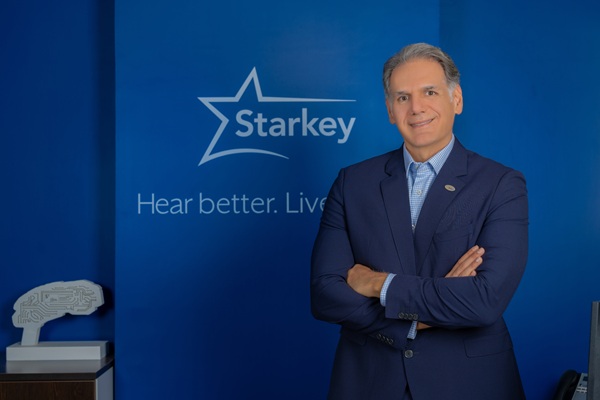
Giscard Bechara, Director,
Starkey Middle East and
Africa, said,
“Better Hearing Month is a
moment to pause and ask a
simple question - when was
the last time you had your
hearing checked? Most of us
monitor our eyes, our teeth,
and our blood pressure. But
hearing, which is
fundamental to how we
connect with the people and
the world around us, is
consistently overlooked. At
Starkey, we believe hearing
care should be part of every
adult’s routine health
check, not something people
only think about when the
damage is already done.”
The challenge is
particularly acute in the
Middle East and Africa,
where approximately 30
million people are affected
by hearing loss, and the
prevalence stands at around
7.2% of the population. In
sub-Saharan Africa alone, 40
million people live with
hearing loss, and that
figure is projected to reach
97 million by 2050. The WHO
estimates that hearing aid
provision in low- and
middle-income countries
covers just 3% of actual
need.
The
hidden cost of untreated
hearing loss
The consequences of
untreated hearing loss
extend far beyond difficulty
following conversations. A
landmark 2024 update of The
Lancet Commission on
Dementia identified hearing
loss as the single largest
modifiable risk factor for
dementia from mid-life,
reinforcing a growing body
of evidence linking
untreated hearing loss to
accelerated cognitive
decline. A 2026 study
published in Cell Stem Cell
further established a causal
relationship between hearing
loss and cognitive decline,
demonstrating through
controlled laboratory
research that auditory
deprivation directly affects
neurological function.
A generation at
risk
The WHO
estimates that over 1.1
billion young people aged 12
to 35 are at risk of
permanent, avoidable hearing
loss due to unsafe listening
practices, including
prolonged use of earphones
and headphones at high
volumes and attendance at
loud entertainment venues.
Research published in BMJ
Global Health found that
approximately 24% of young
people using personal
listening devices and 48%
attending loud venues
regularly exceed safe sound
exposure levels.
In
2025, the WHO and ITU
(International
Telecommunication Union)
jointly released a new
global standard for safe
listening in video gameplay
and esports, reflecting
rising concern that gaming
environments represent an
additional, underappreciated
source of hearing damage,
particularly among younger
demographics.
“In our
region, we have a young,
connected population that
spends hours every day with
earphones in, often at
volumes that would surprise
them if measured. Add to
that the ambient noise of
our rapidly growing cities,
loud social gatherings, and
a cultural tendency to see
hearing loss as something
that only affects older
people, and you have the
conditions for a public
health challenge that is
building quietly but
relentlessly,” said Giscard.
How modern
technology is changing the
hearing care conversation
For those already living
with hearing loss, Starkey’s
latest innovation, Omega AI,
launched in October 2025 and
is now available across the
Middle East and Africa,
representing a significant
leap forward. The platform’s
DNN 360 Directionality
system, the world’s first
deep neural network-powered
directional hearing system,
continuously analyses the
wearer’s sound environment
and adapts in real time,
delivering up to 28%
improved speech
intelligibility and up to an
8 dB improvement in
signal-to-noise ratio
compared to previous Starkey
technology.
Omega AI
also introduces
industry-first health and
wellness features through
the My Starkey companion
app, including automatic
respiratory rate monitoring,
guided balance exercises,
fall detection with
caregiver alerts, and
TeleHear AI, a generative
AI-powered tool that helps
users troubleshoot hearing
issues in real time with 93%
predictive accuracy.
“This month, we encourage
everyone in our region to
take one meaningful step
toward better hearing. Book
a hearing evaluation. Talk
to your children about safe
listening. Ask your employer
about noise exposure in the
workplace. These are small
actions that can have a
profound impact on long-term
health, relationships, and
quality of life,” concluded
Giscard.
 PRINT
THIS ARTICLE
PRINT
THIS ARTICLE
|